Made-to-measure shallow wardrobes in Gandia
When the space you have is measured in centimetres of depth, a standard wardrobe simply won't do. Our made-to-measure shallow wardrobes in Gandia are designed for hallways, entrance halls, alcoves and bedrooms where every ten centimetres counts. A shallow wardrobe can still be perfectly comfortable if it is planned well: what you hang, how the doors open and how much floor space is left free. Here is what you need to know before requesting your design.
Shape your next wardrobe.
Try out the measurements, plan the interior layout and choose your finishes. See your idea take shape and share it with us so we can prepare your quote.
Send us your configuration with your measurements and we'll give you a guide price within 24 hours, free of charge. The measuring visit at your home comes afterwards.
Total depth and usable depth
The first mistake with a shallow wardrobe is looking only at the external depth. What matters is the usable depth: what is left inside once you subtract the thickness of the back panel, the doors and the fittings.
A wardrobe with an external depth of 40 cm may offer barely 33 or 35 cm of usable space, depending on the door system. With that margin, a conventional hanging rail won't fit without adjustments, whereas shelves, slim drawer units and baskets work without any problem. That's why it pays to measure with the usable depth in mind, not the catalogue figure.
How to hang clothes when depth is short
A standard hanger is about 40 cm wide, and hung front-on it needs a similar depth. In a shallow wardrobe this can be solved in two ways: turned rails, which position the hangers sideways, or shelves and drawers so you can fold clothes instead of hanging them.
Side-on rails let you hang shirts, dresses and light jackets in just 30 or 35 cm. Thick coats, on the other hand, suffer and come out creased. If you know which items take up the most room, it's easy to decide which part of the wardrobe will be rail and which will be shelves and drawers, making the most of every level. A pull-out rotating rail also helps you see everything at a glance, without having to pull out each hanger to check what's behind it.
Sliding, hinged or bifold doors
Sliding doors aren't always the best solution when depth is limited. Sliding doors sit on runners that take a few centimetres off the usable depth and always leave part of the interior covered. Hinged doors, by contrast, don't use up any depth on runners, but they need room to swing open.
In a narrow hallway, a wide hinged door can block the way. One alternative is narrow doors that open like a fan, or bifold doors, which need a shorter swing. The choice depends on how much floor space is left in front of the wardrobe and whether you prefer to see the whole wardrobe at once.
Have you already measured the space?
Send us a photo and the approximate measurements on WhatsApp and we'll give you some initial guidance.
Making the most of a hallway without narrowing the passage
- 01
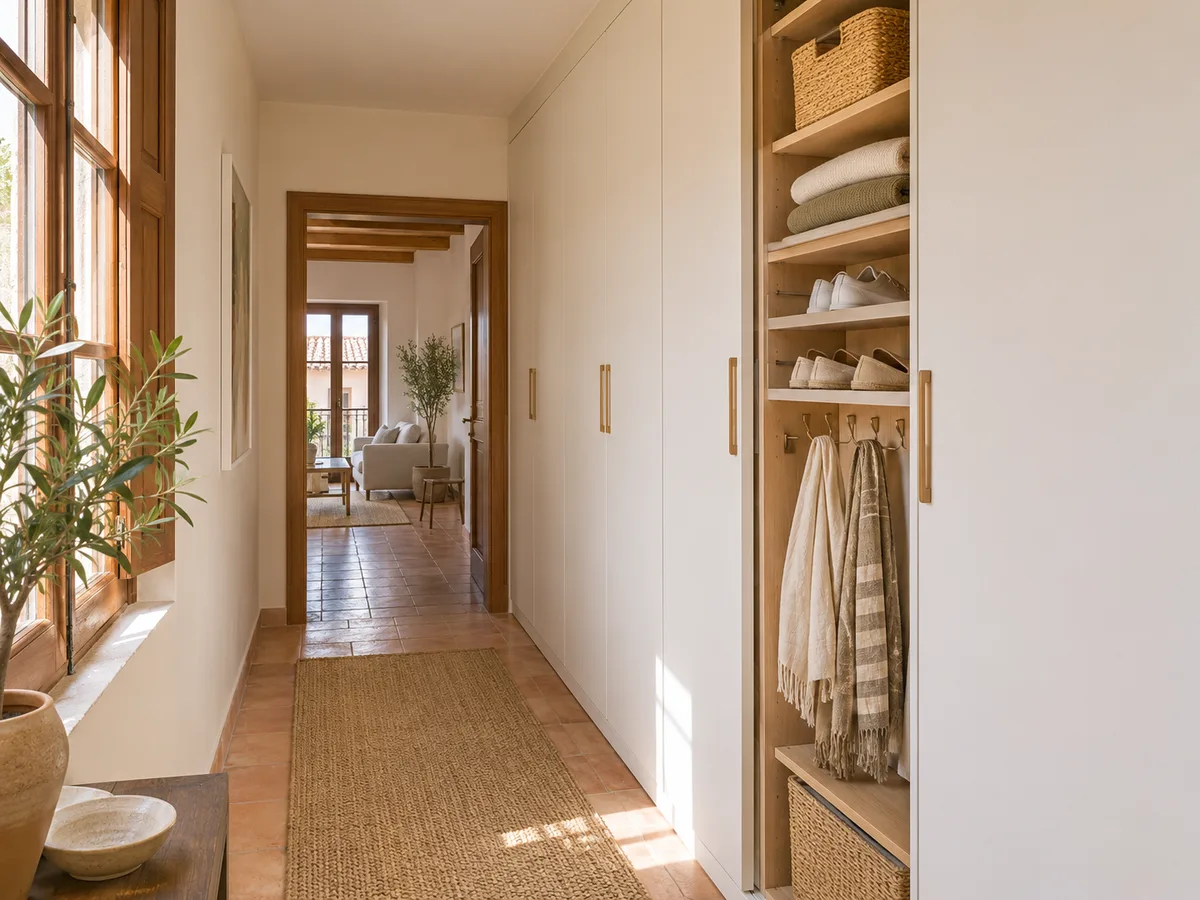
A hallway is one of the best places for a narrow wardrobe, but the limit is circulation. A good rule of thumb is that, once the wardrobe is in place, the clear passage shouldn't drop below about 80 cm, enough to walk through comfortably and move baskets or suitcases.
- 02
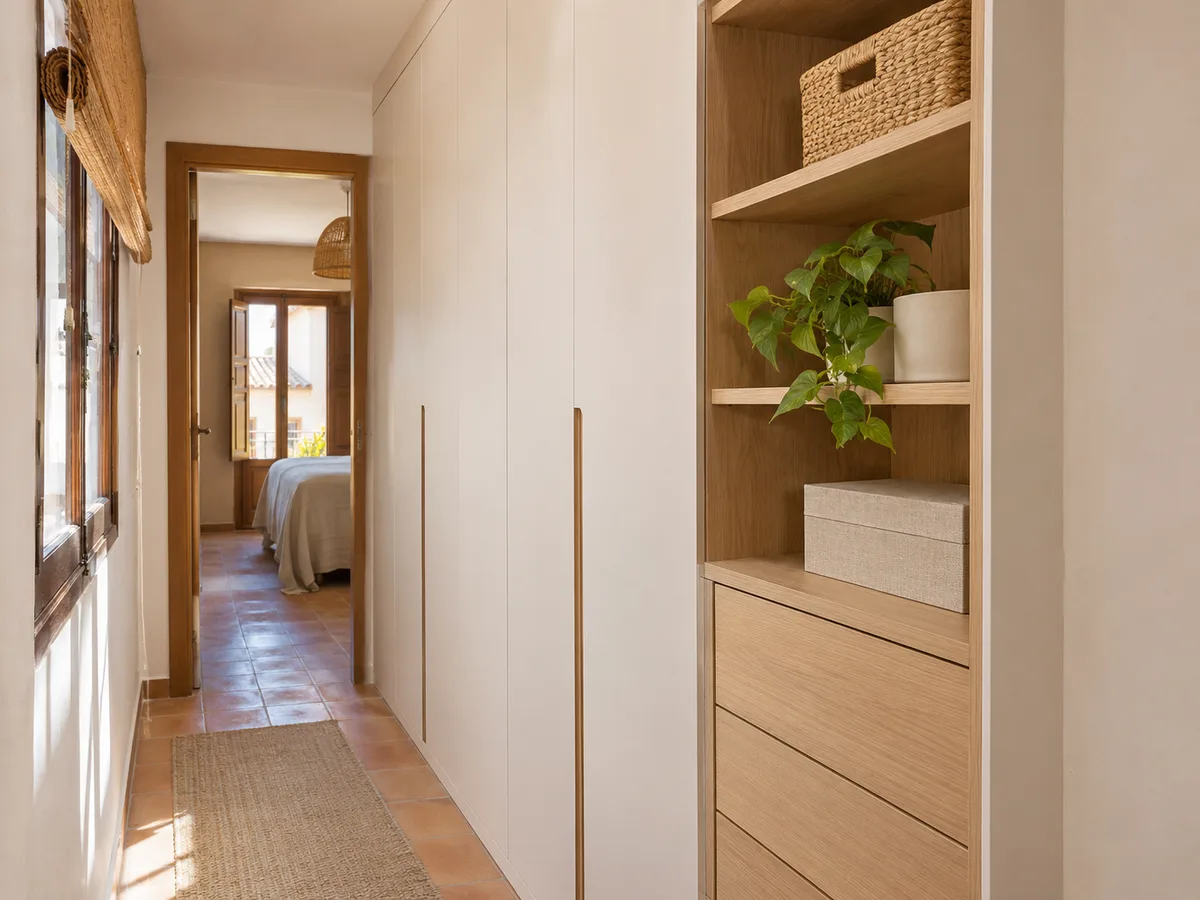
With a wardrobe 30 to 35 cm deep, the hallway loses very little space and you gain storage for towels, blankets, the iron or cleaning supplies. It's best to avoid protruding details such as long handles, which catch on clothing as you walk past. Recessed handles or push-to-open doors keep the front smooth.
Alcoves, wall recesses and usable corners
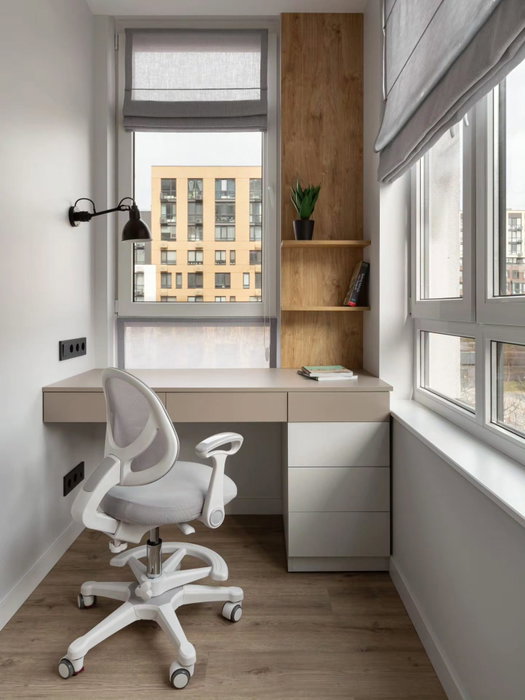
Not every shallow wardrobe goes in a hallway. Many gaps beside a door, behind an open door, between two partition walls or above a radiator can take a shallow, made-to-measure wardrobe.
In a home in Gandia it's common to find walls with a projection, a duct or a pillar that breaks the line. A made-to-measure shallow wardrobe can follow that contour with stepped sides and fillers that avoid dead space. The result is a wardrobe that looks like part of the wall and stores things where before there was just a wasted corner.
Latest work by SI, ARMARIO
@si.armario
Made-to-measure wardrobes and walk-in wardrobes
Latest posts
What to store in a narrow wardrobe
A shallow wardrobe works very well for shoes, household linen, cleaning products, tinned food, toys or books. In the bedroom it suits folded T-shirts, sportswear, bags or accessories.
What doesn't work so well is bulky items, such as large boxes or uncompressed duvets. If your priority is storing bed linen or suitcases, it's worth considering a deeper unit elsewhere in the home and keeping the narrow wardrobe for what fits comfortably. Making a list of what you want to store is the best starting point. It lets you decide how many shelves, drawers and pull-out baskets you need and how much height to give each type of item, avoiding gaps that end up serving no purpose.
Ask us to come and measure up in Gandia
- 01You leave us your name and your area.
- 02We message you on WhatsApp to agree a day.
- 03The measuring visit costs €50 and is free if you place an order.
Adjustable heights and shelves
When depth is limited, height becomes your main resource. A shallow wardrobe that goes up to the ceiling doubles the capacity of a low one, and the top cupboard can hold whatever you use least.
Adjustable shelves let you reorganise the interior when your needs change, without touching the structure. For example, raise a shelf to store boots or lower it to add another for shoes. With a tall front, the key is to divide up the zones: the most-used items at hand height, occasional things up high and heavy items at the bottom, so the shelves don't sag.
Finishes that lighten a narrow space
- 01
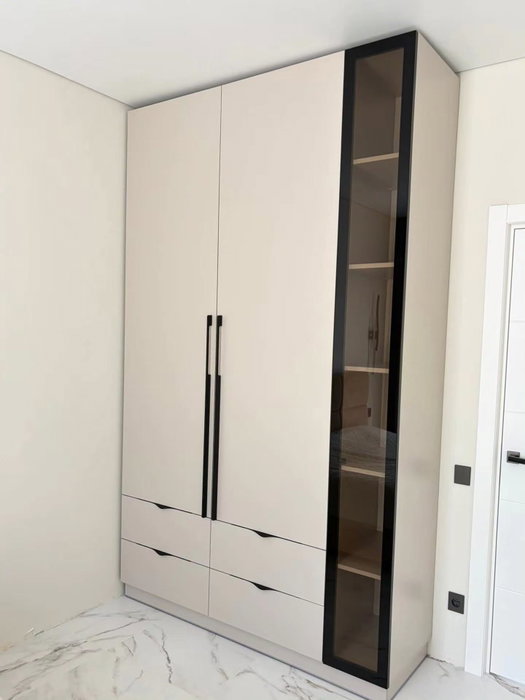
In a space with little depth, colour affects the feeling of spaciousness. Light, matt tones reduce the visual weight of the wardrobe, while dark ones make it more prominent. A plain front, with no frames or mouldings, avoids shadows and keeps the whole piece looking light.
- 02
If the wardrobe is in a hallway or entrance hall, a mirror on one of the doors widens the perspective and makes leaving the house easier. Discreet interior lighting helps you tell items apart on shallow shelves, where the light from the room doesn't always reach the back. In narrow wardrobes, a light interior with the back panel in the same tone as the sides avoids a tunnel effect and lets you see everything you store in a single glance.
How to request your shallow wardrobe
In the configurator, enter the width, height and, above all, the available depth. You'll receive a design to review and, with it and your measurements, our team will send an estimated price in about a day, at no cost.
The measuring visit costs €50 if you don't go ahead and is not charged if you order the wardrobe; manufacture usually takes between two and three weeks, and installation is scheduled separately. If you have doubts about the usable depth, message us on WhatsApp with a photo of the space and the measurement taken at skirting-board height and at shoulder height, because walls are rarely perfectly straight, or fill in the quote request form.
Enquiry
Tell us about your project in Gandia
- 1We read your message and look at your photos.
- 2We reply on WhatsApp with a first figure.
- 3We measure up and prepare the final quote. The measuring visit costs €50 if you don't go ahead with the order and is free if you do.
We don't cut a single board until you've approved the design and the price.
Questions
Frequently asked questions about wardrobes in Gandia
After installation: warranty and care for your wardrobe.
Can a useful wardrobe fit in an alcove only 40 cm deep?
Yes. With an external depth of 40 cm you're left with about 33 to 35 cm of usable space. That's enough for shelves, slim drawer units and turned rails with lightweight clothes. For thick coats it's worth adding another, deeper unit.
What changes if I hang my clothes on hangers?
A hanger takes up about 40 cm front-on, so in a shallow wardrobe it is placed sideways using rotating rails. This works with shirts and dresses, but not as well with heavy coats.
Are sliding doors always the right choice?
No. Runners take a few centimetres off the interior and leave part of the opening covered. Sometimes narrow hinged doors or bifold doors give more usable depth, as long as there is some clear space in front.
What is the minimum depth a made-to-measure wardrobe in Gandia can have?
It depends on the use. For shelves and small items you can go down to 25 or 30 cm; for clothes hung sideways, we recommend going above 35. A measuring visit shows what is possible on your wall.
Can a narrow wardrobe go in a hallway?
Yes, as long as the clear passage stays comfortable, around 80 cm. With a depth of 30 to 35 cm the hallway barely feels any different, and recessed handles prevent snagging.
Can a shallow wardrobe be extended later?
If it's planned from the start, yes: side units or a top cupboard can be left in the design to add capacity later. Mention it in your request so the design doesn't rule that option out.
Shall we talk about your project?
Send us a photo of the space and some approximate measurements on WhatsApp: we'll give you some initial guidance and arrange the measuring visit.