Made-to-measure open wooden walk-in wardrobes in Gandia
An open wooden walk-in wardrobe turns a whole room, or a passage between two rooms, into a space where everything is on show and within easy reach. At SI, ARMARIO we design open wooden walk-in wardrobes in Gandia and the surrounding area, dividing the walls into hanging, shelving and drawer zones, with a clear walkway and the wood as the visible feature. Here you'll find out how to decide on the layout, what to leave on show and how to keep it all tidy.
Shape your next wardrobe.
Try out the measurements, plan the interior layout and choose your finishes. See your idea take shape and share it with us so we can prepare your quote.
Send us your configuration with your measurements and we'll give you a guide price within 24 hours, free of charge. The measuring visit at your home comes afterwards.
A room without doors is organised by zones
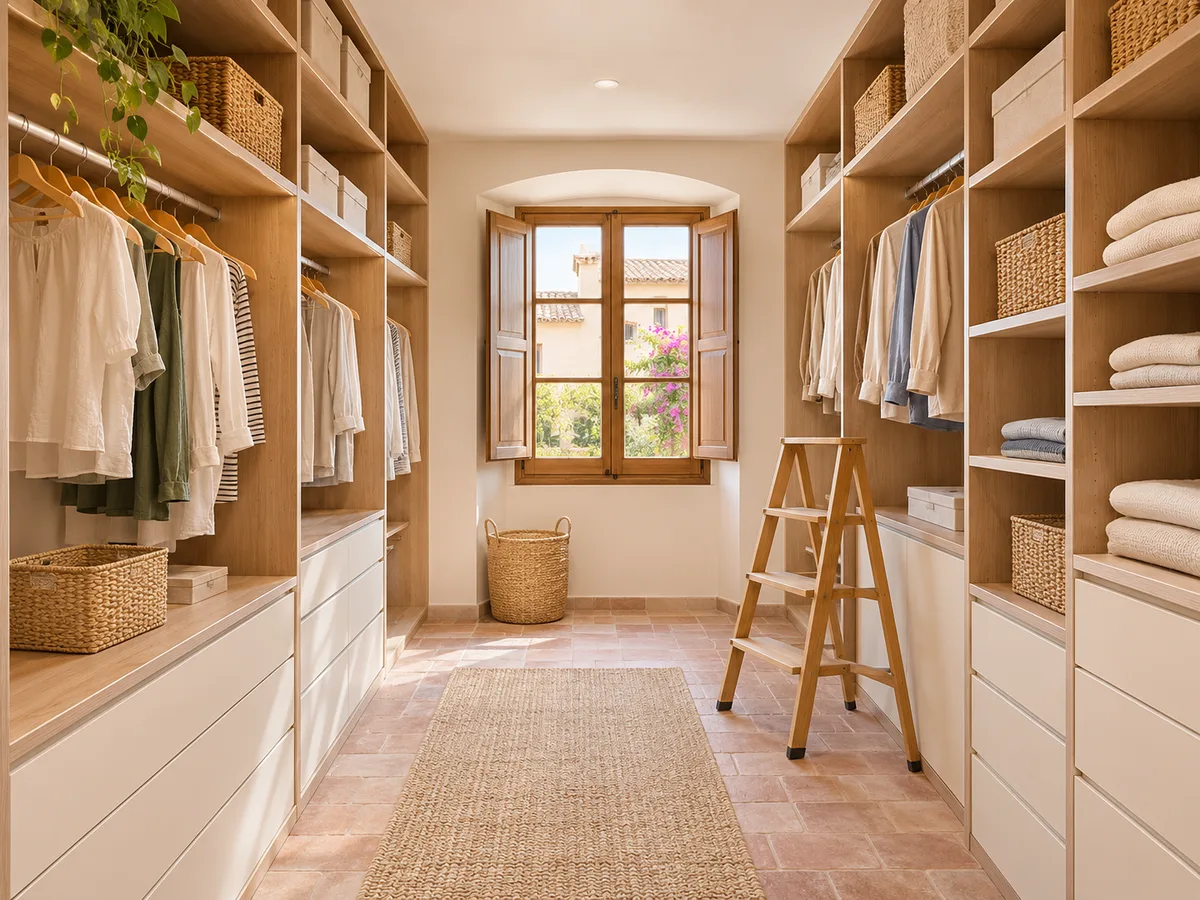
When there are no doors to hide anything, the layout is the only thing that keeps the whole space in order. That's why the first step with an open wooden walk-in wardrobe is to draw up the room wall by wall and give each one a clear purpose: one for long garments, another for shirts and jackets, another for folded items and shoes.
Unlike an open wardrobe, which sits against a single wall, here you work with several: in a straight line, an L, a U, or in parallel if the room is a passage between the bedroom and the bathroom. The layout decides how many units fit and how much space is left for you to move around.
In a Gandia home with a spacious main bedroom, the usual solution is to use two facing walls and leave the third for the window or the entrance. With approximate measurements you can start in the configurator and then fine-tune on the plan.
Clear walkway and reach
An open walk-in wardrobe lives or dies by its walkway. The sensible approach is to leave a comfortable central aisle so you can open a drawer and bend down at the same time without bumping into the unit opposite; if two people use it at once, you'll need a little more.
Height is allocated according to how often you use things. Everyday items go between hip and eye level, seasonal items move up to the higher zones, and heavy things, such as suitcases or boxes, go down to the floor or into units with drawers. To reach the top you plan for a fold-down step or an extendable rail, and make sure no high shelf is too deep.
With no doors to swing open, you don't lose any turning space, but it's worth drawing the drawers pulled out on the plan to check that they don't block the walkway or the bedroom door.
Which clothes stay on show and which go in drawers
A walk-in wardrobe without doors works when you're honest about what deserves to be displayed. Hanging garments, the shoes you wear every week and structured bags look good on open rails and shelves. Underwear, socks, belts and small accessories need drawers with dividers, even if the rest of the wardrobe is open.
That mix is what keeps the look clean: rails and shelves for the showpieces, drawers for the small items. The drawers in an open wooden walk-in wardrobe can have plain fronts in the same tone as the uprights, so they read as part of the structure rather than an add-on.
If you're looking for ideas on interior layout and accessories, the storage page sets out the organisation options you can add.
Have you already measured the space?
Send us a photo and the approximate measurements on WhatsApp and we'll give you some initial guidance.
Exposed wood, veneer and interior materials
- 01
In an open walk-in wardrobe everyone sees the edges, shelves and sides, so the choice of material matters more than in a closed one. Solid wood has presence, but it costs more and reacts to humidity; natural veneer on board gives you the real grain with more stability; board with a wood-effect finish is cheaper and stands up well to daily use, although it isn't natural wood and we think that should be made clear.
- 02
The edges deserve attention: a thin, well-finished edge makes a shelf look lighter, and a thick one makes it look sturdier. In an open wooden walk-in wardrobe, that decision is visible from the bedroom door.
- 03
Always ask for a physical sample of the shade. The light in a Gandia room isn't the light of a screen, and the same colour can change quite a bit between morning and afternoon.
Corners, shelves and rails: open walk-in wardrobes in an L or a U
L and U shapes make the most of a room, and they're also the ones that need the most care in the corners. A corner unit that's badly resolved leaves a spot nobody can reach; well resolved, it becomes a continuous rail or an angled shelf with good access.
In an L, the short run is usually kept for shoes or folded items and the long one for hanging. In a U, the back wall can draw the eye: this is where your best-cared-for pieces go, along with a finishing shelf at eye level.
Rails should be fixed to the structure with intermediate support brackets once they pass a certain length, because accumulated clothing makes the rail sag over time. A well-planned open wooden walk-in wardrobe is designed with the real load of the hangers in mind, not just the empty space.
Latest work by SI, ARMARIO
@si.armario
Made-to-measure wardrobes and walk-in wardrobes
Latest posts
Lighting that doesn't punish your clothes
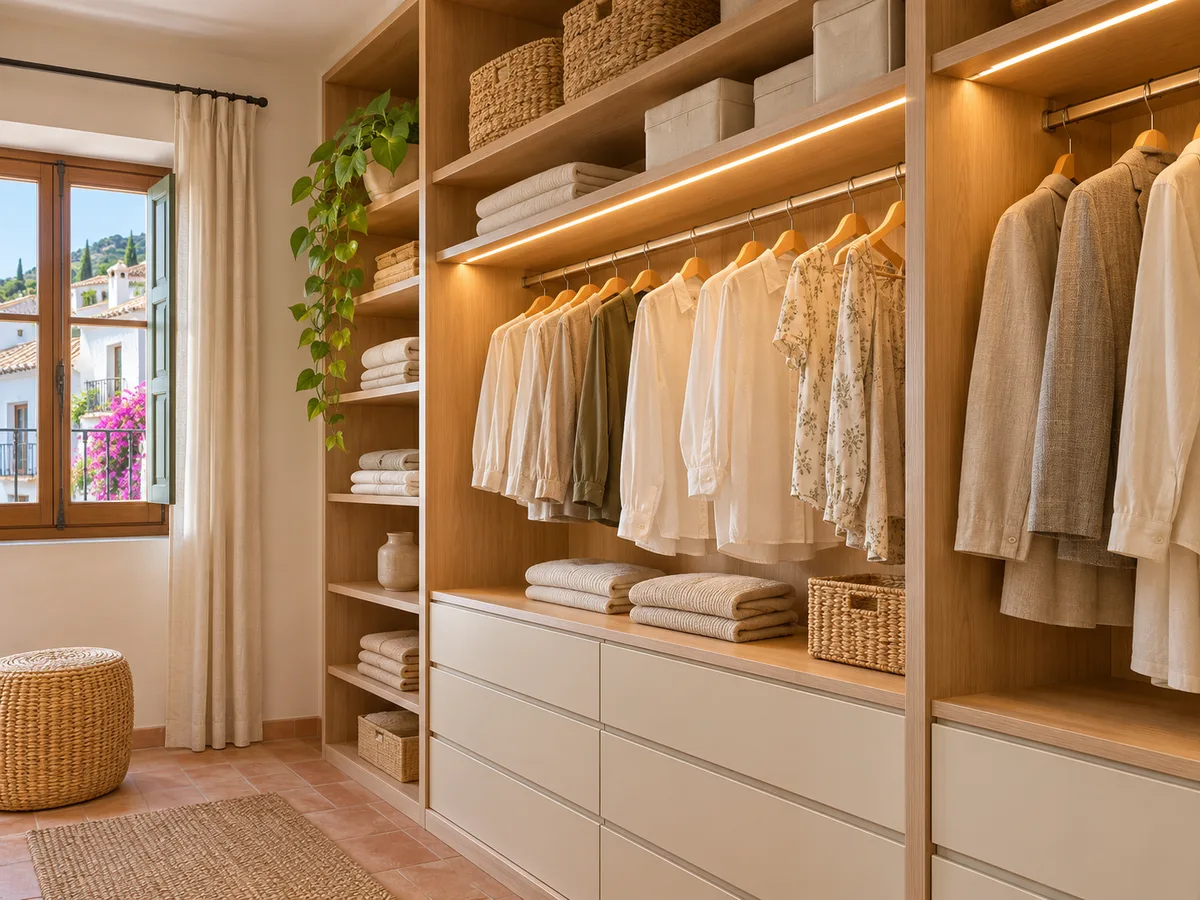
In a walk-in wardrobe without doors, lighting is part of the composition, because nothing covers it. A continuous strip of light under the shelves lights the garments without dazzling and gives the back of the unit depth; a direct spotlight over the rail, on the other hand, creates harsh shadows and warms the exposed fabrics.
It's worth choosing a warm to neutral colour temperature, similar to the light in your bedroom, so the colour of your clothes doesn't change when you step outside. Opening sensors are handy in a passage between rooms, although installing them depends on the electrical possibilities in your home.
One practical point: exposed wood reflects the tone of the light. With very cool light it turns greyish and with very warm light it darkens, so it's best to try the whole thing with the sample before deciding.
Ask us to come and measure up in Gandia
- 01You leave us your name and your area.
- 02We message you on WhatsApp to agree a day.
- 03The measuring visit costs €50 and is free if you place an order.
Dust, ventilation and everyday cleaning
Without doors, dust settles on whatever is on show. There's no way to avoid it entirely, and it's better to plan the cleaning than to promise otherwise. Smooth shelves without grooves can be wiped clean in seconds; those with a complex profile collect more.
What does help is keeping occasional storage, such as blankets, party clothes or out-of-season coats, in closed units or garment covers, and leaving on show what you use often and therefore move around.
Ventilation is the upside of the open system: air circulates between the garments and musty smells are avoided. In a coastal area like Gandia, that circulation is welcome in summer, although it's best not to place the walk-in wardrobe against a damp wall.
Balancing open surfaces and closed storage
- 01
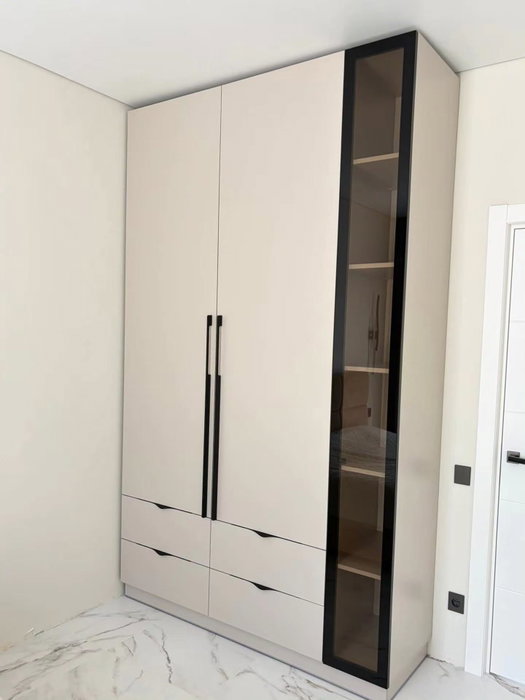
Few people want an open walk-in wardrobe from floor to ceiling. It's usual to combine open units with a closed one, a block with doors for what you don't want to see or a tall drawer unit with wooden fronts, so the whole gains order without losing its lightness.
- 02
If you're still torn between closing off part of the contents or leaving everything on show, you can look at how closed walk-in wardrobes are planned or decide zone by zone. You can also start with a configuration and let the team come back to you with a price guide within 24 hours of receiving it, measurements included.
- 03
Then comes the measuring visit, which costs €50 only if the project doesn't go ahead in the end, and manufacturing, which takes around 2–3 weeks on average; fitting is arranged separately.
Enquiry
Tell us about your project in Gandia
- 1We read your message and look at your photos.
- 2We reply on WhatsApp with a first figure.
- 3We measure up and prepare the final quote. The measuring visit costs €50 if you don't go ahead with the order and is free if you do.
We don't cut a single board until you've approved the design and the price.
Questions
Frequently asked questions about wardrobes in Gandia
After installation: warranty and care for your wardrobe.
Why isn't an open wardrobe enough for this use?
An open wardrobe sits against one wall and is thought of as a piece of furniture. An open wooden walk-in wardrobe takes up a room or a passage, has several walls and requires you to plan the walkway, the lighting and the zones. That's why it's designed with a full floor plan and not just a single elevation.
Will a walk-in wardrobe with no doors have drawers?
Yes, and it's what we'd recommend. Drawers hold the small items and keep the whole thing looking clean. They can have fronts in the same wood as the uprights so they blend into the structure, and they're drawn on the plan so that opening them doesn't block the walkway.
How much effort does it take to keep an open walk-in wardrobe tidy?
A little more consistency than a closed one. What's on show gets seen, and dust settles on the shelves. With smooth surfaces, everyday clothes on display and occasional storage in closed units, cleaning is a quick pass once a week.
Can I combine two shades of wood in the same walk-in wardrobe?
Yes. In a walk-in wardrobe without doors, it's normal to use a more visible finish on the uprights and drawers and a simpler one on the backs and rear panels. The important thing is that the shades work together, which is why we always compare against a physical sample before the choice is final.
How much clear space do I need to move around comfortably?
The right approach is to leave a central aisle that lets you open a drawer and bend down without touching the unit opposite. With two people using it at once, it's worth allowing a bit more. We check it on the plan, with the drawers drawn open.
Shall we talk about your project?
Send us a photo of the space and some approximate measurements on WhatsApp: we'll give you some initial guidance and arrange the measuring visit.